 PieFed
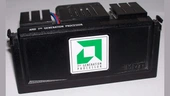
PC processors entered the Gigahertz era today in the year 2000 with AMD's Athlon — AMD hit marketing gold with its 1 GHz Athlon, beat Intel by a nose
submitted by
 Rekall Incorporated
www.tomshardware.com/pc-components/cpus/pc-proc…
Consumer PCs have long abandoned the multi-GHz race for core count and NPU inflation.
 Share on Mastodon
 Share on Reddit
 Share on WhatsApp
I think there are two parts to this. There are factors beyond clock rate; clock rate alone doesn’t give a full picture. Going from say 166 MHz to 1 GHz brings radical performance improvements without too many drawbacks, once you go above 3-4 GHz, the marginal increase in clock rates becomes increasingly expensive in terms of heat management.
EDIT: Didn’t realize there was difference between mHz and MHz.
Watch out for your prefixes, 166 mHz would be one operation every 6 seconds.
I don’t think there ever has been a CPU that slow ;-)
(small letter “g” doesn’t exist as a prefix, but could be easily confused as the unit gram-Hertz)
I once made an incredibly limited cpu on paper, basically had the whole cpu in logic gate on a piece of paper. Tried to run the most basic programm on it by hand and i can assure you thet it was much slower than 166mhz XD
Haha )